In commercial kitchens, grease rarely stays where it belongs. While many restaurant operators focus heavily on hood cleaning and kitchen sanitation, rooftop grease accumulation is often ignored until serious structural damage, code violations, or fire hazards develop.
Unfortunately, rooftop grease damage is one of the most expensive and preventable issues affecting commercial kitchen exhaust systems today.
From roof membrane deterioration and clogged drainage systems to slip hazards and NFPA 96 compliance failures, unmanaged grease runoff can significantly impact building safety, maintenance costs, and insurance liability. Therefore, implementing proper rooftop grease containment systems is essential for long-term facility protection.
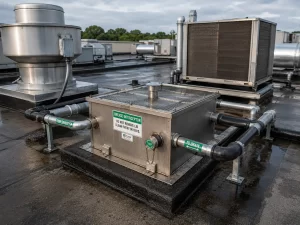
To reduce rooftop contamination and improve NFPA 96 compliance, many facilities invest in professional grease containment systems for restaurants designed specifically for commercial kitchen exhaust applications.
Why Rooftop Grease Is a Serious Problem
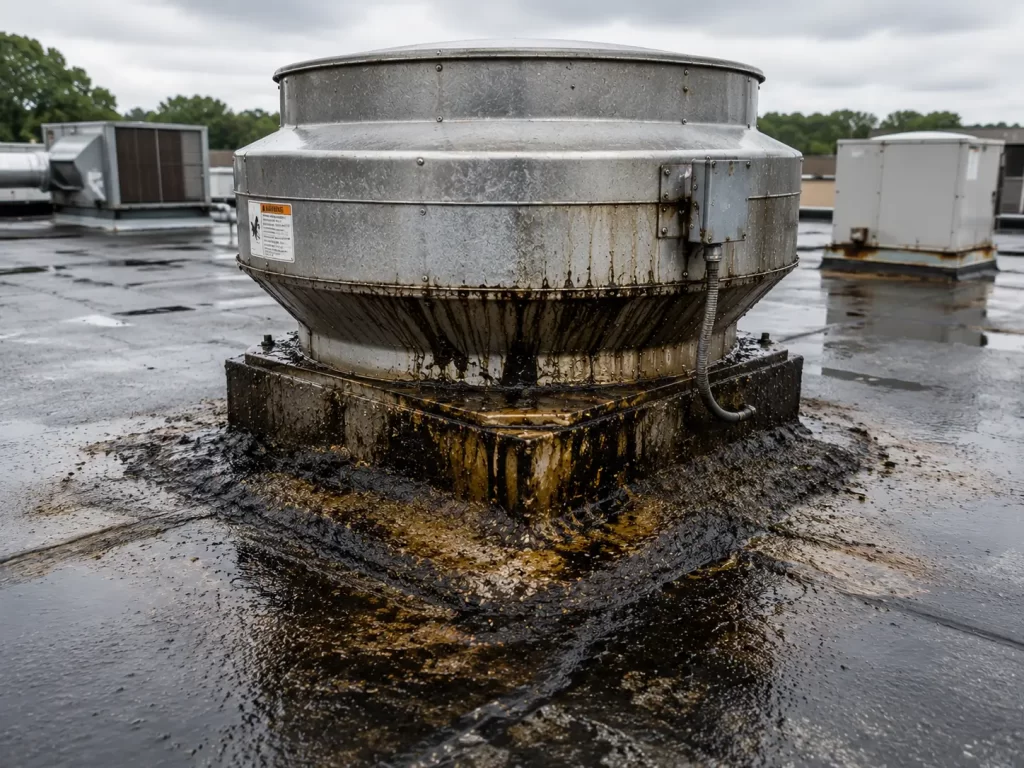
Commercial kitchen exhaust fans continuously discharge grease-laden vapors. Over time, grease bypasses filters, escapes containment systems, and accumulates around rooftop exhaust fans.
As temperatures fluctuate, this grease spreads across roofing surfaces and begins damaging critical building components.
Common Rooftop Grease Damage Includes:
- Roof membrane deterioration
- Corrosion of HVAC equipment
- Blocked roof drainage systems
- Structural roof weakening
- Slip-and-fall hazards
- Pest attraction
- Increased fire risk
- EPA and environmental violations
Additionally, grease contamination often voids roofing warranties because roofing manufacturers classify grease as a chemical contaminant.
How NFPA 96 Addresses Rooftop Grease
According to NFPA 96 standards, rooftop exhaust systems must prevent grease accumulation that could create fire or safety hazards.
NFPA 96 specifically requires:
- Accessible exhaust systems for cleaning
- Proper fan hinging for safe maintenance
- Grease containment around rooftop fans
- Routine inspection and cleaning procedures
- Safe access to duct systems
Consequently, restaurants operating without proper rooftop grease management systems often fail inspections or face increased liability exposure.
Common NFPA 96 Violations Restaurants Make
Many restaurants unknowingly create major compliance risks by overlooking rooftop exhaust maintenance.
Improper Fan Access
Technicians cannot safely access fans for cleaning without proper hinge kits. This creates safety hazards and limits effective maintenance procedures.
Missing Grease Containment
Without proper grease containment systems, grease spills directly onto roofing materials and causes extensive rooftop damage over time.
Inaccessible Ductwork
A lack of compliant duct access doors prevents proper inspection and cleaning of exhaust duct systems.
Saturated Grease Filters
Old or damaged grease filters allow excessive grease discharge into exhaust systems and rooftop areas.
Infrequent Maintenance
Skipping scheduled cleanings increases fire risk, reduces airflow efficiency, and accelerates rooftop deterioration.
Why Omni Supply Solutions Stand Out
Omni Supply Corporation specializes in NFPA 96-compliant grease containment systems and commercial kitchen exhaust safety products engineered for long-term rooftop protection.
Recommended Solutions for Rooftop Grease Management
Furthermore, Omni Supply products are trusted by hood cleaners, HVAC contractors, facility managers, and restaurant maintenance teams nationwide.
Signs Your Grease Containment System Needs Replacement
Many grease containment systems fail gradually, making problems difficult to detect until damage becomes severe.
Warning Signs Include:
- Grease stains spreading across roofing surfaces
- Pooling grease near exhaust fans
- Corroded rooftop equipment
- Strong grease odors outdoors
- Overflowing grease collection systems
- Roof leaks around exhaust curbs
- Cracked or deteriorated containment materials
If these warning signs appear, immediate corrective action is strongly recommended.
Rooftop Grease Maintenance Checklist
Proper preventative maintenance dramatically reduces repair costs and improves NFPA 96 compliance.
Monthly Rooftop Inspection Checklist
- Inspect grease containment systems
- Check exhaust fan hinges for secure operation
- Replace saturated grease filters
- Inspect roof membrane condition
- Verify duct access door integrity
- Remove accumulated rooftop grease
- Inspect drainage pathways
- Document maintenance activity for compliance records
Additionally, maintaining detailed service records helps support insurance claims and inspection compliance.
Expert Tips for Preventing Rooftop Grease Damage
Use Hydrophobic Grease Filters
High-efficiency grease filters reduce grease carryover into rooftop exhaust systems and improve airflow performance.
Install Fan Hinge Kits
Proper hinging systems improve technician safety while ensuring easier access for routine cleaning and maintenance.
Perform Scheduled Cleanings
Routine exhaust maintenance prevents excessive grease accumulation and reduces long-term repair costs.
Upgrade Grease Interceptors
Modern grease containment systems provide significantly better rooftop protection compared to outdated containment methods.
Inspect After Severe Weather
Heavy rain and high temperatures accelerate grease migration across roofing materials and drainage systems.
Real-World Example
A multi-location restaurant chain experienced repeated roof membrane failures caused by grease saturation around exhaust fans. After installing Super Hinge™, Grease Gutter™, and EFI™ Exhaust Fan Grease Interceptors, the company reduced roof maintenance costs by more than 40% within two years while improving inspection compliance.
Conclusion
Rooftop grease damage is far more than a cosmetic issue. It directly impacts fire safety, building integrity, environmental compliance, and operational costs.
For commercial kitchens, proactive grease management is essential for maintaining NFPA 96 compliance and protecting valuable roofing systems.
By investing in professional-grade containment systems, fan hinging solutions, compliant duct access doors, and high-performance grease filtration, facilities can significantly reduce risk while improving long-term maintenance efficiency.
Omni Supply Corporation provides trusted commercial kitchen exhaust safety products designed specifically for hood cleaners, HVAC contractors, facility managers, and restaurant maintenance professionals.
Frequently Asked Questions
What causes rooftop grease damage?
Rooftop grease damage occurs when grease-laden vapors escape commercial kitchen exhaust systems and accumulate on roofing surfaces, causing membrane deterioration, corrosion, and fire hazards.
Why is rooftop grease dangerous?
Rooftop grease creates slip hazards, increases fire risk, damages roofing materials, attracts pests, and may lead to NFPA 96 compliance violations.
What is an NFPA 96-compliant grease containment system?
An NFPA 96-compliant grease containment system captures grease discharged from exhaust fans to prevent rooftop contamination and improve fire safety.
How often should rooftop grease systems be inspected?
Commercial kitchen rooftop grease systems should be inspected monthly and cleaned regularly according to cooking volume and NFPA 96 requirements.
What are the signs of grease containment failure?
Common signs include grease pooling, roof stains, foul odors, roof membrane damage, overflowing grease trays, and excessive grease around exhaust fans.
Why are exhaust fan hinges important?
Exhaust fan hinges allow safe access for cleaning and maintenance, improving technician safety and supporting NFPA 96 compliance.
Protect Your Commercial Roof With Omni Supply
Looking to improve rooftop grease management and maintain NFPA 96 compliance?
Explore Omni Supply’s complete line of grease containment systems, exhaust fan hinges, duct access doors, grease interceptors, and replacement filters designed for commercial kitchen exhaust professionals.